35mm Film Wedding Photographer in Europe
For couples who notice the grain before anything else
I’m Sebastian Schwemmer, a documentary wedding photographer based in Bavaria, Germany. For the past two years, most of the frames I care about have come out of a 35mm camera. I photograph weddings on film and digital, side by side, across Italy, Spain, the Alps and the rest of Europe. The film isn’t a filter on top. It’s real raw, developed and scanned by a quality lab, one frame at a time.
Why I photograph weddings on film
Film makes everything slower. Thirty-six frames on a roll means I don’t press the shutter on a maybe. I wait – for the hand on the lower back, the aunt laughing a little too loud, the light sliding off the wall at seven. The small moments in between that only happens once on your wedding day. What stays is the invisible wedding: the moments nobody staged and nobody noticed. On film, they look the way they felt.
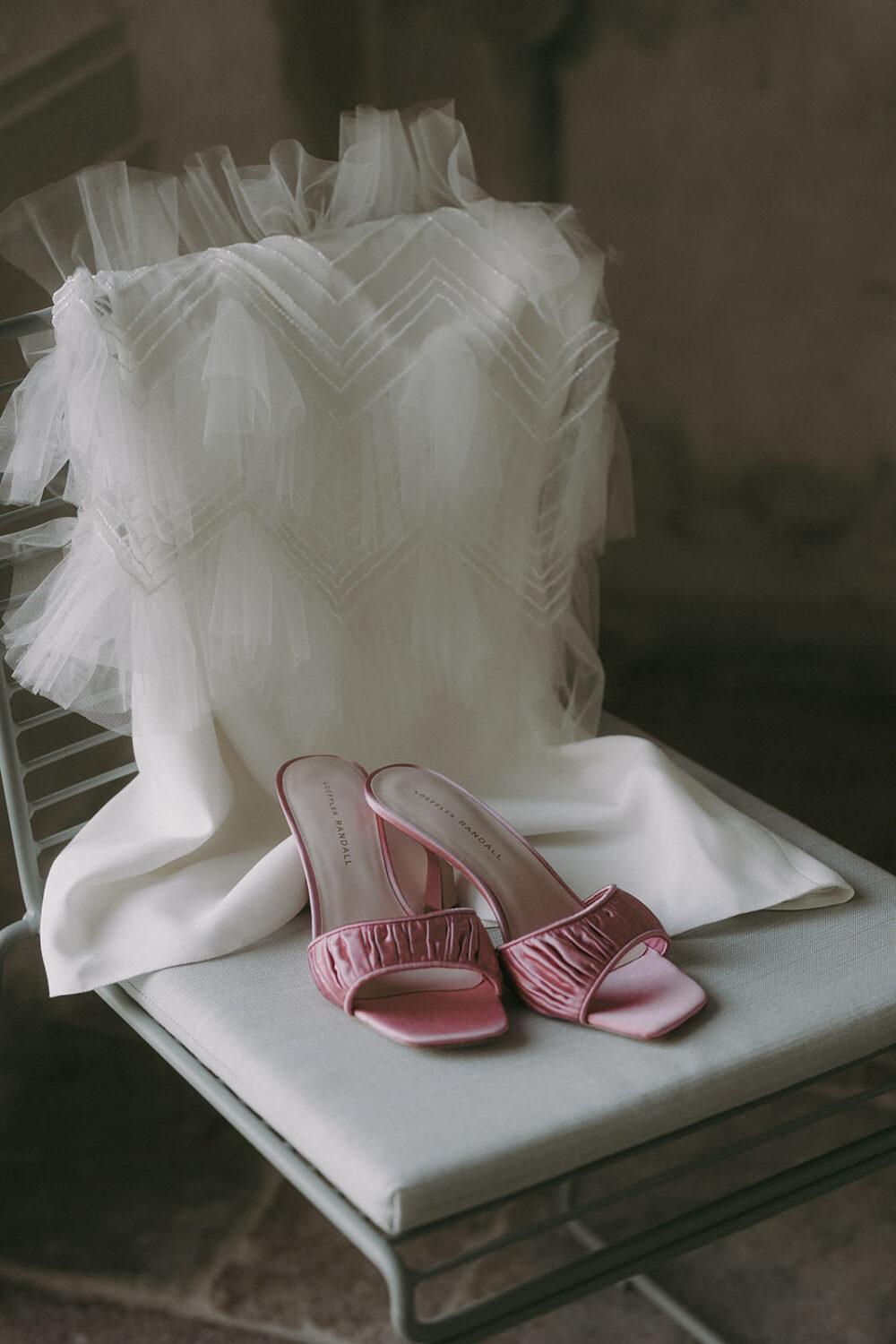
Film and digital, on the same day
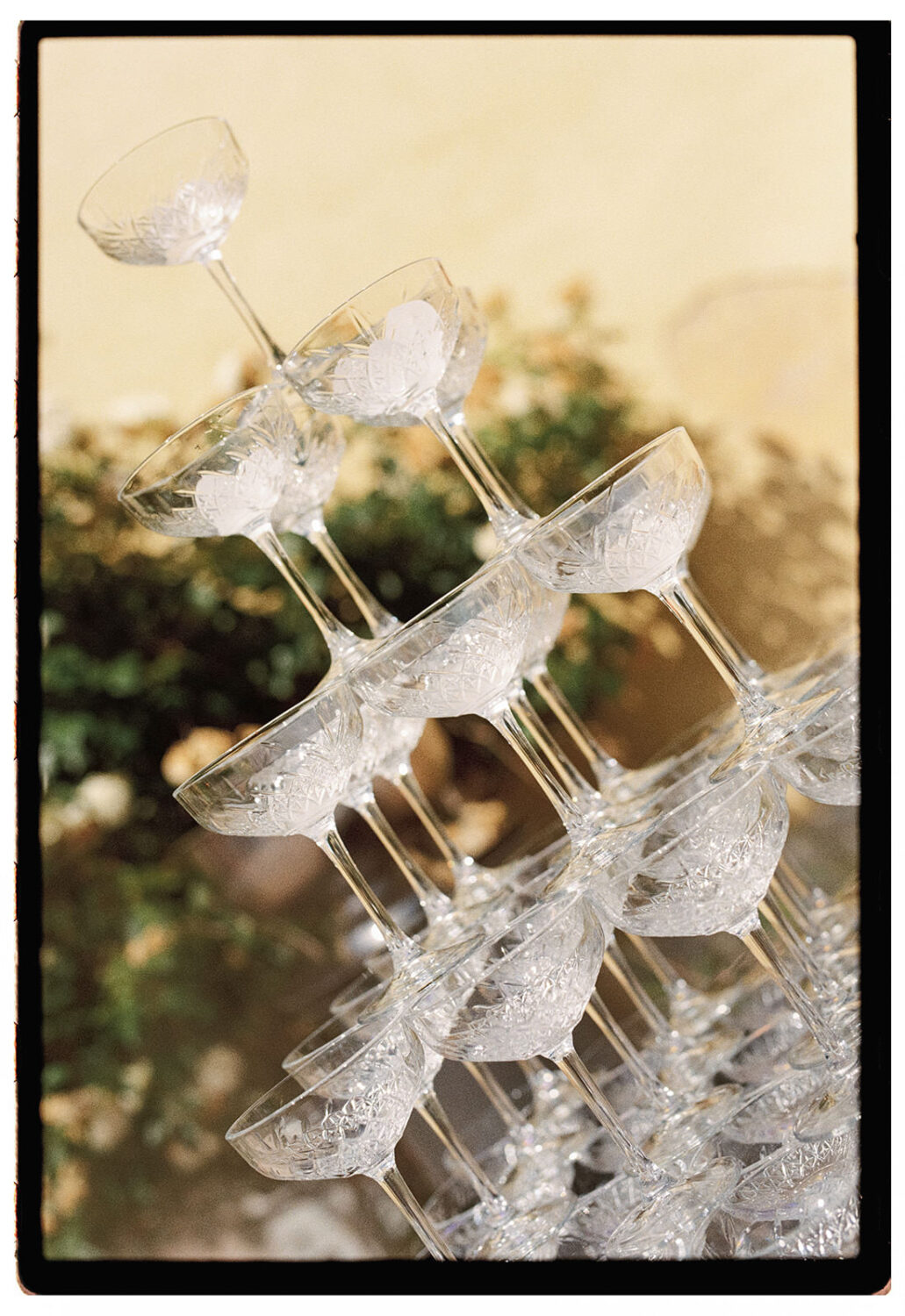
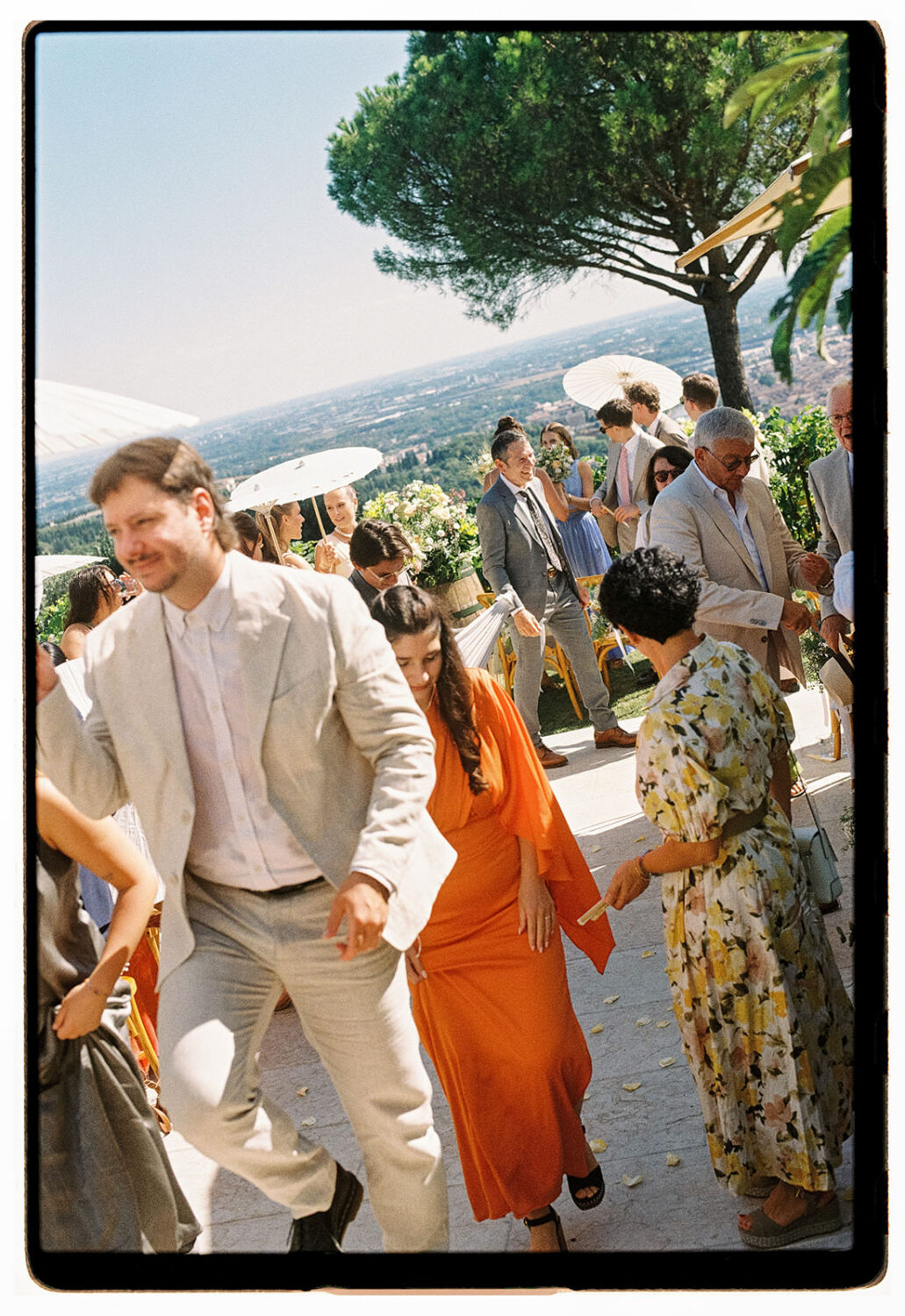
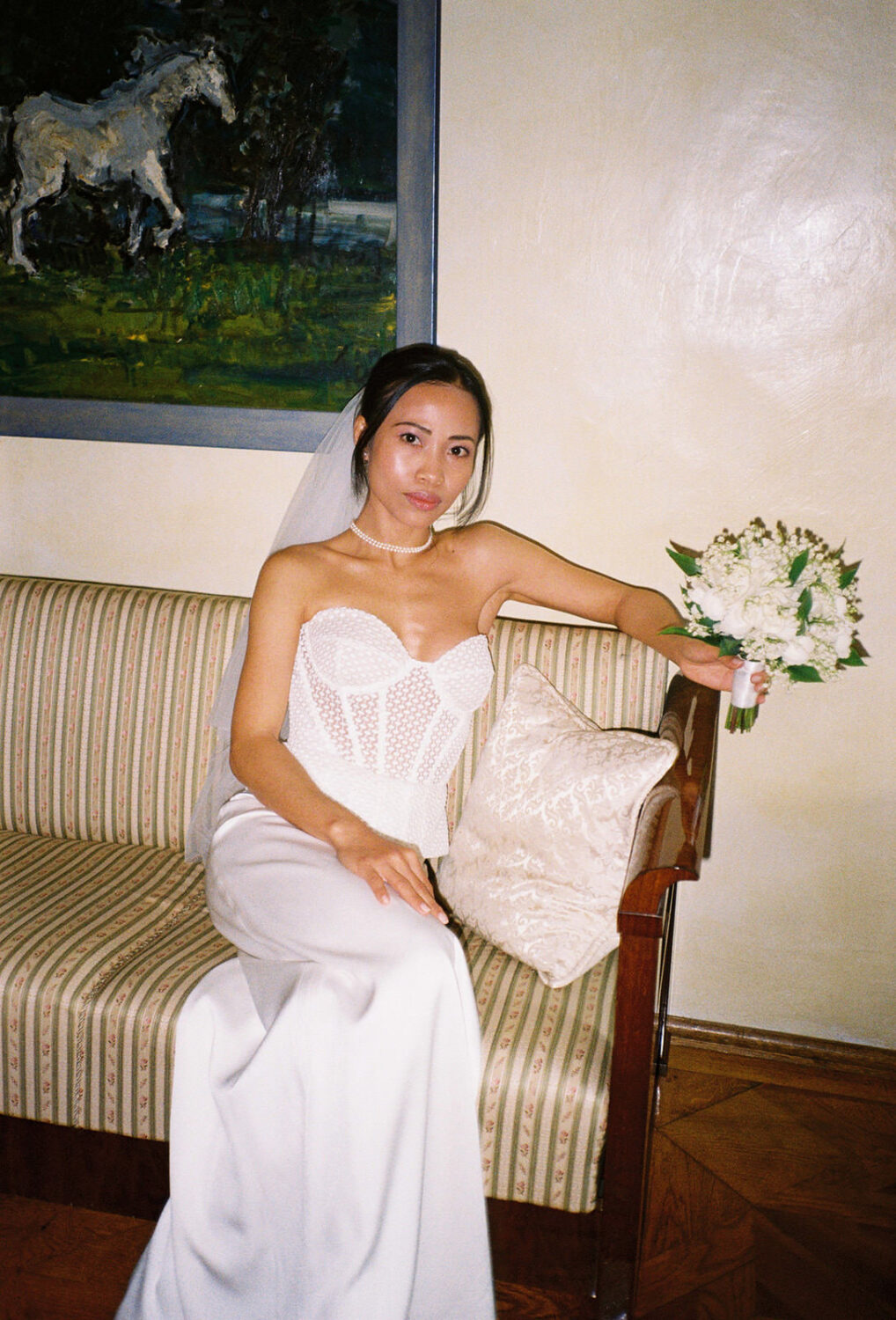
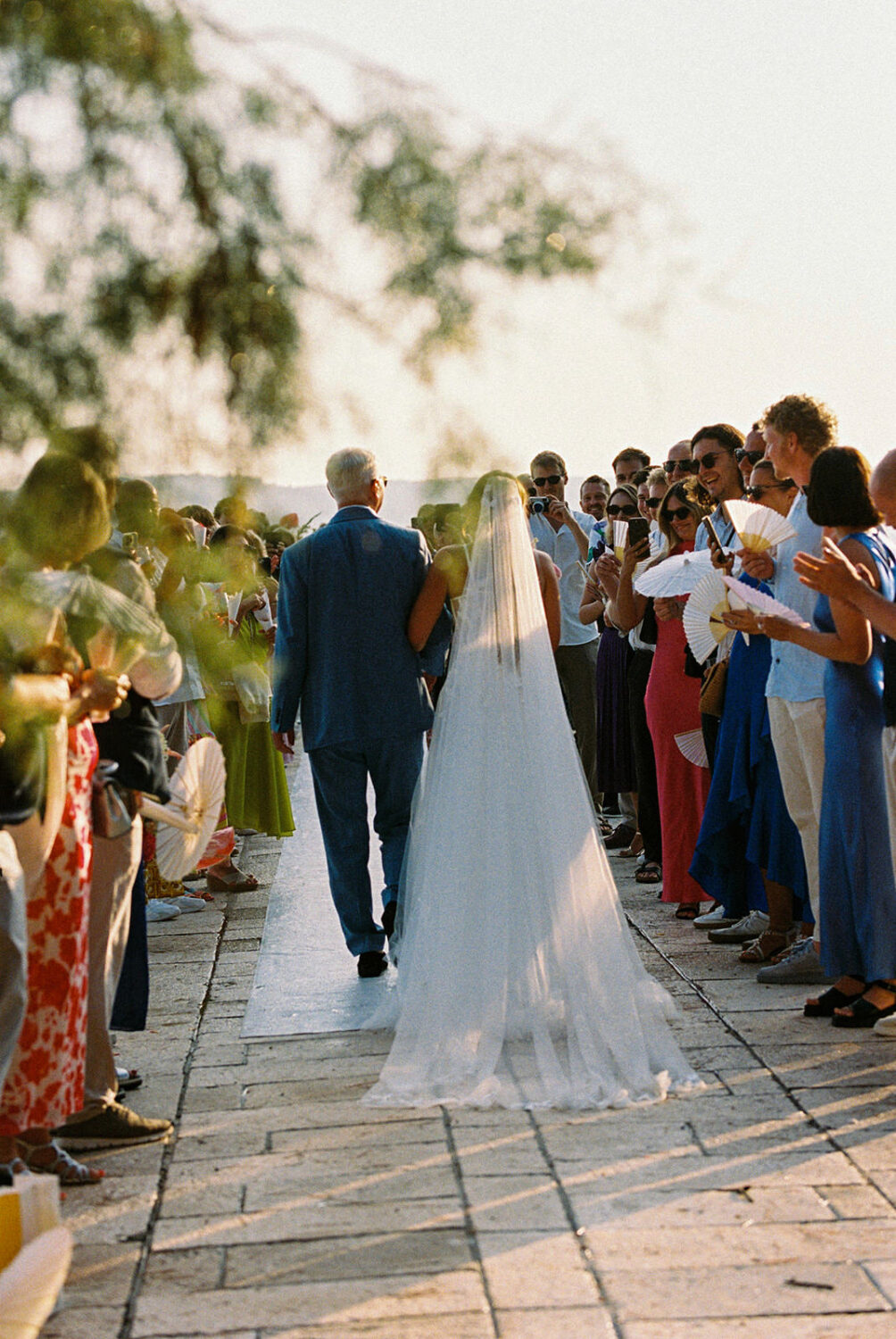
Digital carries the day. It covers the ceremony, the speechees, the dark dance floor. Everything that can’t be missed. Film runs alongside on a second or third body, for the frames that earn it: getting by the window, the walk after the vows, the portraits when the sun drops. Your gallery holds both, edited to sit next to each other whithout competing. Some couples want one roll. Some want the entire day captured on film. Both are right.
I shoot on Canon EOS 3, Canon EOS 1N RS and Yashica T3. On 120mm I shoot on Zenza Bronica S2. Colour is mostly Kodak Gold 200 and Kodak Portra 400; when the light runs out, I switch to flash or Portra 800. Every roll goes to Shooters Lab, developed and scanned at the highest resolution. I don’t put film presets on digital files and call it analog. If it says film, it was film.
Cameras, film stocks and the lab
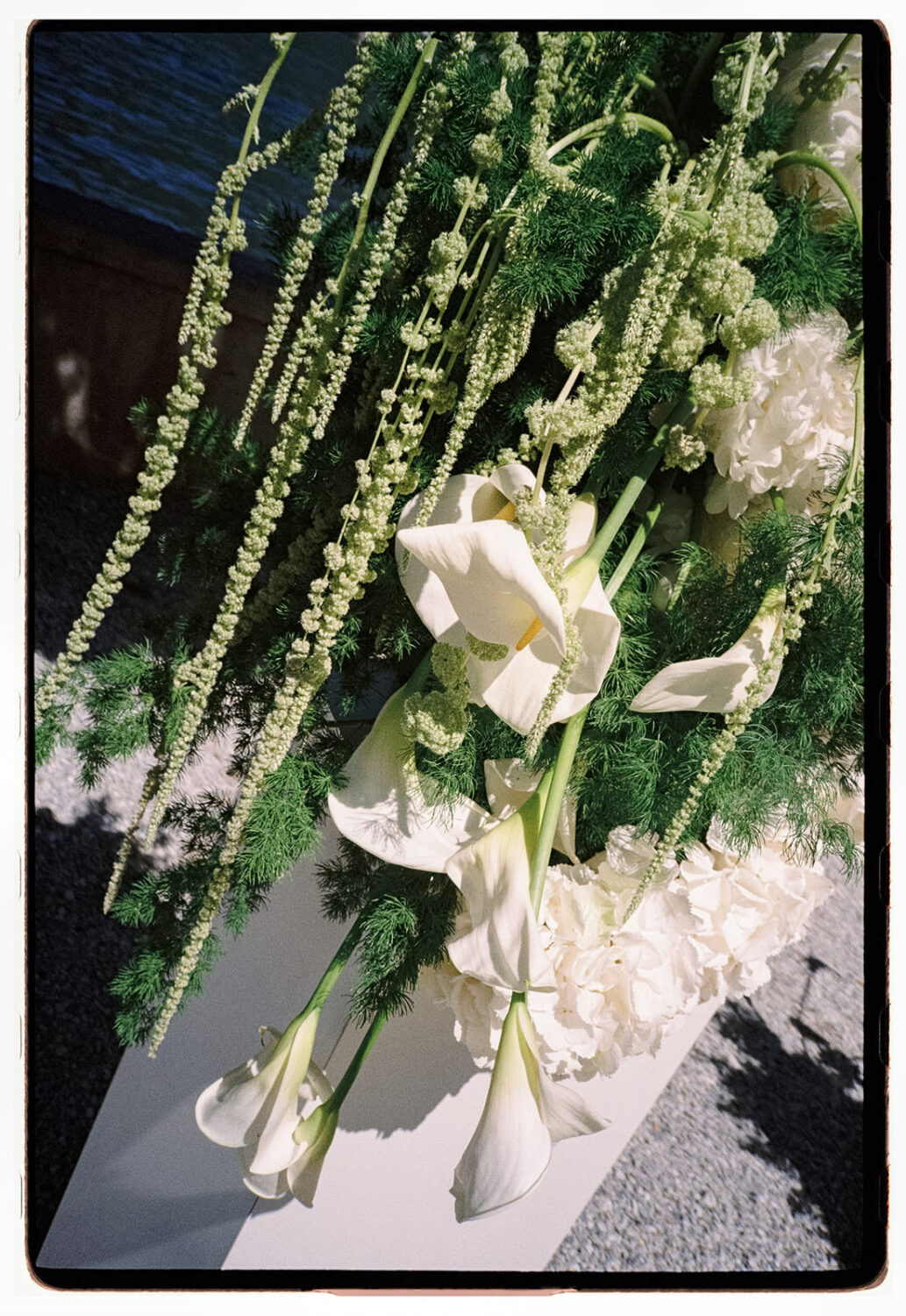
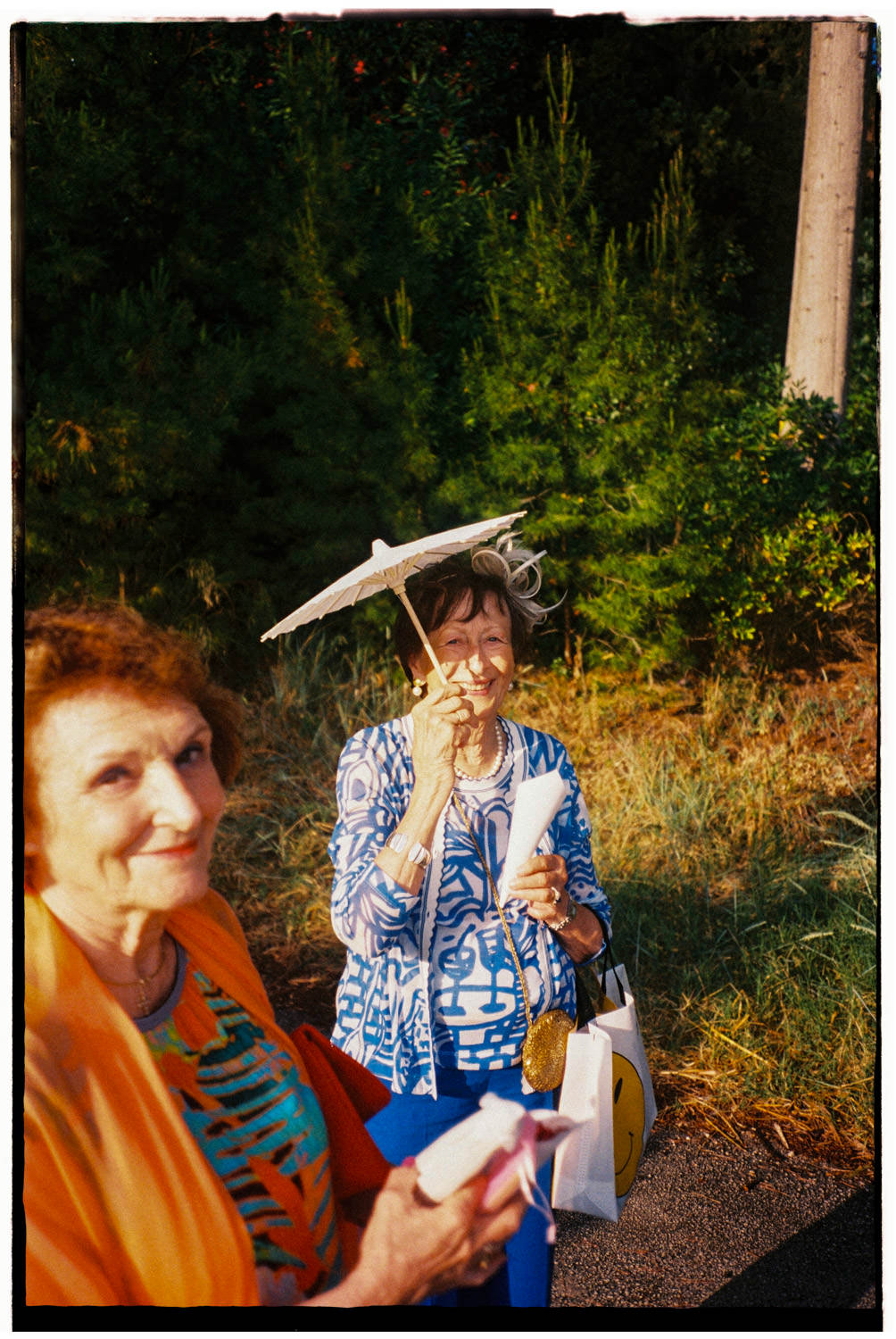
Black and white film at weddings
Some moments don’t need colour. A father reading his speech off a small, handwritten paper. Two hands on a table at one in the morning. On black and white film, perfect for deep and emotional pictures who needs full focus on the moment. I also keep one roll for the evening / party with flash.
Most of my film work happens where the light lets it: Lake Garda, Tuscany, Lake Como, Venice, Mallorca or Croatia. Late Mediterranean light is where Portra does its best work. Film works in in a German Castle in November too. It just asks for a different kind of patience, more flash or higher ISO. I travel anywhere in Europe, travel costs always included. I’m most at home at weddings of up to around 80 guests, where there’s room to notice things.
Film wedding photography in Italy, Spain and across Europe
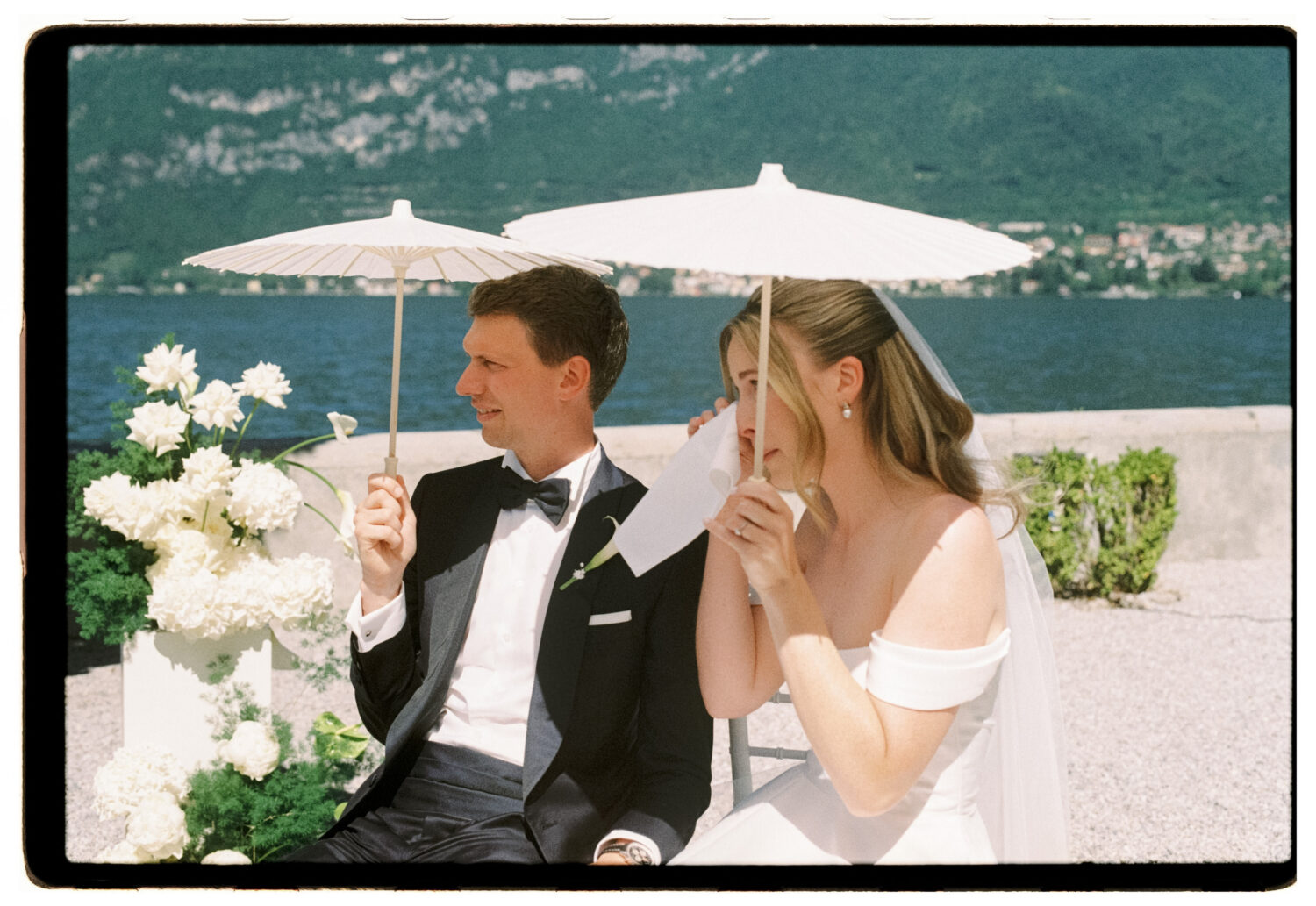
THE ART OF QUIET LOVE
DIGITAL + FILM
How many film photos you receive and when
A roll holds 36 frames or 12 frames with medium format. Not every one makes it and that’s part of the deal. Expcet around 25-30 finished images per roll, delivered together with your digital gallery or as a whole analog gallery. Developement and scanning add around 20 days. Your full gallery arrives within 12 weeks. Film photos come as high-resolution scans, ready to print.
Film is a part of how I work and see weddings, not an upsell. My 12-hour coverage includes one roll of 35mm film. If you want to go the special way I love to document your wedding entirely on film. I shoot around 28-30 rolls for a 12-hour coverage, start at €6,000, with travel included in Europe.
What analog wedding photography costs
Questions couples ask about film
01.
Do you photograph the whole wedding in film?
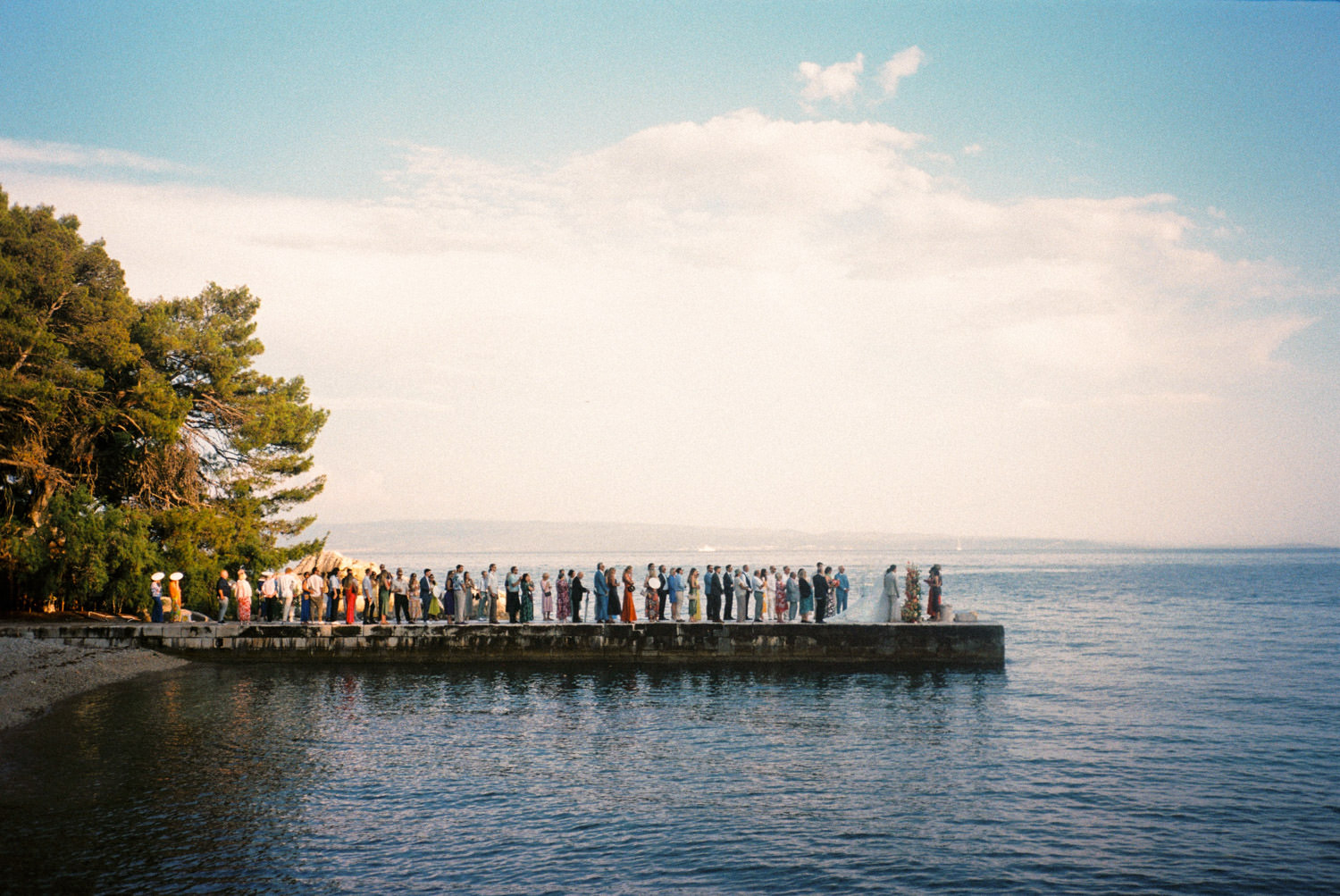
Yes, if that’s what you want. In 2025, I photographed a wedding at Vila Dalmacija in Split, Croatia, entirely on 35mm film. Most couples choose a mix: digital covers the full day, film runs alongside for the moments that suit it. Full film coverage is for couples who want a gallery that’s analog from the first frame to the last.
02.
How many film photos will we receive?
Around 25–30 finished images per 36-exposure roll. My 12-hour coverage includes one roll; most film-loving couples add two to four more. Film images are delivered as high-resolution lab scans inside your main gallery.
03.
Which cameras and film stocks do you use?
I shoot 35mm on Canon EOS 3 or Canon EOS 1N RS and Yashica T3, Zenza Bronica S2 for 120mm.. For colour I use Kodak Portra 400 or Kodak Gold 200, switching to Portra 800 in lower light and also adds flash to my photos. For black and white I load Ilford FP4 Plus 125. All rolls are developed and scanned by Shooters Lab, Barcelona.
04.
Does film work in low light or at night?
Yes, within limits. Faster stocks like Portra 800 handle dusk and candlelit dinners well. If necessary I also add an Flash to my Cameras with a stock like Kodak Gold 200. On a dark dance floor, digital does the heavy lifting and film takes the quieter frames around it. That’s exactly why I shoot both.
04.
How long does it take to get our film photos back?
Your full gallery, film included, arrives within 12 weeks. Development and scanning at the lab add about 20 days to the digital workflow. You receive everything at once, edited to sit together.
05.
How much does film wedding photography cost in Europe?
One roll of 35mm is included in my 12-hour coverage. Each additional roll costs €100, including development and scanning. Full-film collections start at €6,000, travel within Europe included.
07.
Will the film and digital photos look different?
Yes, slightly – and that’s intended. Film has its own grain and colour response; I edit the digital images so both sit naturally side by side. I never apply film presets to digital files and present them as analog.
08.
Do we get the negatives?
I archive the negatives for you and can rescan any frame on request.
09.
Do you shoot film at destination weddings outside Italy and Spain?
Yes. I photograph weddings on film anywhere in Europe – from the Alps and Germany to Croatia, Portugal and Ireland. Film travels with me as hand luggage and is hand-checked at airport security, never X-rayed in the hold.
10.
Can our wedding be photographed in black and white film only?
Partly. Many couples choose one roll of black and white for the evening or for portraits. A wedding fully on black and white film works best as an elopement or a very small celebration.
Is film right for you?
You probably know already. Maybe there’s a shoebox of your parents’ prints somewhere. Maybe you’d rather a picture be true than sharp. Film is for couples who celebrate with taste – without performance. If that sounds like you, tell me about your day.